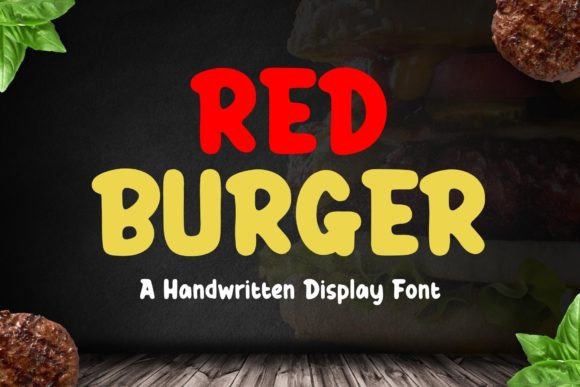
Red Burger Font: A Handwritten Design Asset for Digital Creators
I was redesigning the hero section for a small online boutique specializing in artisan coffee. The client wanted warmth, a sense of handmade care, and a modern look. I had a clean layout, a beautiful product image, but the headline text felt sterile. I swapped the standard sans-serif for Red Burger, and the entire mood shifted. Suddenly, the page felt personal, inviting, and uniquely branded. That moment cemented Red Burger as a go-to asset in my digital design toolkit.
The Digital Personality of a Handwritten Font
Red Burger is a script font that brings an organic, confident energy to digital spaces. Its strokes have a natural flow, with a slightly relaxed baseline that avoids looking overly rigid or perfect. This gives it a modern handwritten feel—not overly formal like a classic calligraphy script, nor too casual like a scribbled note. It sits perfectly in that sweet spot for contemporary web design: friendly yet professional, distinctive yet readable. The overall creative appeal is one of authentic personality, which is exactly what many online brands are striving to convey.
Where Red Burger Shines in Web Layouts
In practical testing across various projects, I've found Red Burger performs exceptionally well in specific, high-impact areas of a website. Its strength is as a display font for creating focal points.
- Hero Titles & Section Headings: On landing pages for creative services or physical products, Red Burger immediately draws the eye and sets a tone. It works beautifully for short, powerful phrases like "Welcome Home," "Handcrafted Goods," or "Start Your Journey."
- Call-to-Action Accents: While not ideal for the small text on a button itself, using Red Burger for a short phrase *above* a button can add persuasive charm. Think "Join the Workshop" or "Get Your Template."
- Logo & Branding Text: For businesses with a personal touch—coaches, makers, boutique shops—Red Burger can form the textual part of a logo with great effect. It's distinctive enough for brand recognition.
- Decorative Accents in Graphics: In blog post graphics, email header images, or social media banners integrated into a site, Red Burger adds a layer of crafted detail. It's perfect for highlighting a quote or a key feature within an image.
In a recent portfolio site for a wedding photographer, using Red Burger for the section titles ("Love Stories," "Your Day") created a cohesive, elegant feel that paired perfectly with the imagery. The font affected the perceived quality and emotional appeal of the entire site, making it feel less like a generic template and more like a bespoke brand experience.
Readability and Technical Considerations for the Web
For web design, readability across devices is paramount. Red Burger holds up well at the sizes it's intended for. On desktop, it's clear and engaging. On mobile, provided you maintain a sufficient font size (I'd recommend not going below 28px for a headline), it remains legible and retains its character. Its slightly open letterforms help here. However, it's crucial to pair it with a high-contrast background. Overlaying it on a busy image requires careful attention to color and weight to ensure it pops.
There are web uses where Red Burger is not suitable. It should not be used for long body copy, navigation menus, form labels, or any interface text requiring quick scanning and high accessibility. Its decorative nature would slow reading and could cause usability issues. Similarly, in dense, informational layouts like dashboards or data-heavy pages, a clean sans-serif is the only choice.
The Essential Pairing: A Clean Sans-Serif
This leads to the most important practical tip: font pairing. Red Burger is a star player, but it needs a strong supporting cast. For almost every web project, I pair it with a simple, highly readable sans-serif font for all body text, UI elements, and longer paragraphs. Fonts like Inter, Open Sans, or system fonts like Arial provide the necessary neutral foundation. This pairing creates a clear visual hierarchy: the handwritten style captures attention and emotion for key messages, while the clean sans-serif ensures effortless reading and navigation. This contrast is fundamental to professional modern typography in web design.
Preparing for Real-World Use: Licensing and Formats
Before integrating any font into a live website or client project, checking the technical and legal details is a must. For Red Burger, you'll want to confirm the included file formats. Typically, you'll need the .OTF or .TTF files for desktop design work. Crucially, you must verify its commercial font licensing terms. Can you use it on a client's website? In their brand kit? For digital ads? Most premium fonts allow this, but always read the license. Also, check for multilingual support if your project requires it.
For web implementation, you'll often be using the font via a webfont service or self-hosting converted files. Ensure you have the proper @font-face setup or that the font is available through a service like Google Fonts or Adobe Fonts if it's listed there. This ensures consistent, fast-loading display across all browsers and devices.
In the end, Red Burger is more than just a pretty typeface. It's a design asset that solves a specific problem for digital creators: how to inject authentic, human warmth into a pixel-perfect layout. When used strategically—for headlines, accents, and branding—it transforms a functional website into a memorable brand experience. It tells the user, before they even read the body copy, that this space is crafted with care. For web designers building sites for creative entrepreneurs, coaches, and makers, that's a powerful tool to have in your font library.